
How Great Software Teams Turn Ambiguous Ideas into Working Products
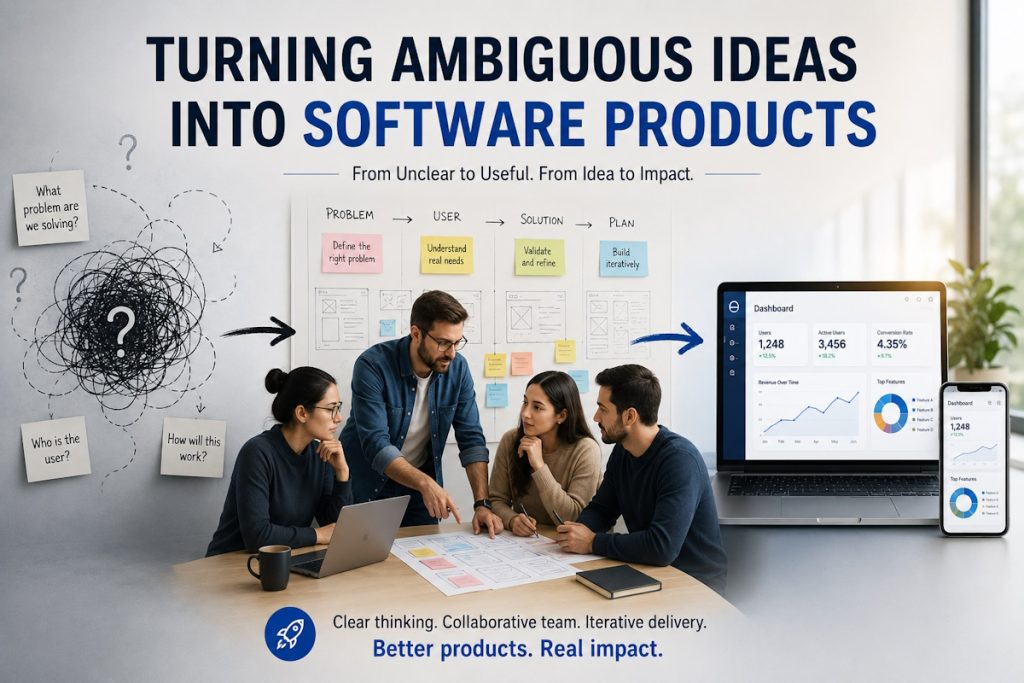
Do you have a groundbreaking idea for a new app or software platform, but aren’t sure how to transform it into a tangible product? The journey from an initial concept to a fully functional software product is a complex one. Many ambitious projects fail because of unclear requirements, poor planning, or a lack of technical expertise. The most successful software development teams, however, have a proven process for turning even the most ambiguous ideas into reality.
This article explores how these teams operate, focusing on the critical steps and product development best practices involved in turning ideas into software products. We’ll examine the key stages, from initial ideation and requirements gathering to development, testing, and deployment. Understanding these practices will empower you to make informed decisions and find the right software development partner to bring your vision to life. Let’s delve into the best practices that separate successful product development from the rest.
The Foundation: Clarifying Your Idea
The first and arguably most critical phase of turning ideas into software products is solidifying the initial concept. This involves more than just a vague notion; it requires a deep dive into understanding the problem you’re trying to solve, who you’re solving it for, and what a viable solution looks like.
Defining the Problem
Every successful software product addresses a specific need or solves a particular problem. Before you start thinking about features or functionalities, take the time to clearly define the problem you’re tackling. What pain points do your target users experience? What are the existing solutions, and what are their shortcomings? Conducting thorough market research and competitor analysis is essential at this stage. This will help you validate your idea and ensure there’s a genuine demand for your product.
Identifying Your Target Audience
Who will be using your software? Creating detailed user personas is a crucial step in clarifying your idea. Understand your users’ demographics, technical skills, and needs. This understanding will drive your product’s features and design. Consider the user journey, as well. How will they interact with the software, and what are their expectations? This clarity will inform all future development decisions.
Crafting a Clear Value Proposition
What makes your software unique? Your value proposition should clearly communicate the benefits users will receive by using your product. Why should users choose your solution over the competition? A compelling value proposition will not only guide product development but also inform your marketing efforts. It defines the core essence of your product and its appeal.
From Concept to Requirements: Defining the Scope
With a clear understanding of the problem and your target audience, the next step involves translating your high-level ideas into concrete requirements. This phase defines the scope of your project and sets the stage for the development process. A well-defined scope is critical for preventing scope creep, managing budgets, and ensuring project success.
Creating Detailed User Stories
User stories are short, simple descriptions of a feature told from the perspective of a user. They help to articulate the functionality and value of each feature. Each story should follow a standard format: “As a [user role], I want [goal] so that [benefit].” User stories serve as a roadmap for the development team, helping them understand what needs to be built and why.
Developing a Minimum Viable Product (MVP)
An MVP is a version of your product with just enough features to satisfy early customers and provide feedback for future product development. Focusing on an MVP is an excellent strategy for reducing risk and validating your concept early. It lets you test your core value proposition with real users before investing in a full-fledged product. Prioritize features that address the most critical user needs.
Documenting Functional and Non-Functional Requirements
Functional requirements describe what the software should do (e.g., user registration, data storage, reporting). Non-functional requirements describe how the software should perform (e.g., speed, security, scalability). Creating detailed documentation for both types of requirements is vital. This documentation becomes the blueprint for the development team and ensures everyone is on the same page.
The Development Phase: Bringing the Idea to Life
Once you have a clearly defined scope and requirements, the actual development phase begins. This is where your idea is transformed into a working software product. The development phase involves coding, testing, and iteration, all guided by the requirements documentation and user feedback.
Choosing the Right Technology Stack
Selecting the appropriate technology stack is a critical decision. Consider the project’s scalability needs, security requirements, and the skills of your development team. Your choice of programming languages, frameworks, and databases will significantly impact the speed, cost, and maintainability of your product. Research and compare different options to ensure they align with your long-term goals.
Adopting Agile Development Methodologies
Agile methodologies, such as Scrum or Kanban, are well-suited for software development. These approaches emphasize iterative development, frequent testing, and continuous feedback. Using agile allows for flexibility, adaptability to changing requirements, and earlier detection of potential issues. Agile promotes collaboration and keeps the development process aligned with user needs.
Prioritizing Regular Testing and Quality Assurance
Testing is a vital part of the development process. Testing should occur throughout the development lifecycle, not just at the end. Comprehensive testing, including unit tests, integration tests, and user acceptance testing, helps ensure the quality and stability of your product. Regular testing helps catch and fix bugs early, saving time and resources. Consider automating your testing processes for greater efficiency.
Deployment and Iteration: Launching and Refining
Once the software is developed, tested, and ready, the next step is deployment. However, the work doesn’t stop after the initial launch. Software development is an ongoing process of iteration, improvement, and adaptation to user feedback. Ongoing maintenance and updates are essential for long-term success.
Planning for Deployment
Develop a detailed deployment plan to ensure a smooth launch. This includes planning for server setup, data migration, and user onboarding. Consider different deployment strategies, such as rolling deployments, to minimize downtime. Testing your deployment plan beforehand is essential.
Gathering and Analyzing User Feedback
User feedback is invaluable for refining your product. Collect feedback through surveys, user interviews, and in-app analytics. Analyze user behavior to identify areas for improvement and areas where users are encountering issues. Use this feedback to prioritize future development efforts and make data-driven decisions.
Iterating and Updating Your Product
Software development is an iterative process. Use user feedback and market insights to update and improve your product. Release new features, fix bugs, and optimize performance regularly. Continuous improvement is key to keeping your product relevant and competitive. Regular updates demonstrate your commitment to your users and your product’s long-term success.
Frequently Asked Questions
1. How do I choose the right software development partner?
Consider the partner’s experience, portfolio, tech stack expertise, and client reviews. Ensure they understand your vision and are capable of managing the entire development lifecycle. Look for transparent communication and a collaborative approach.
2. What is the importance of an MVP?
An MVP allows you to validate your idea, gather user feedback early, and minimize development costs by focusing on core features. It helps you test your assumptions and make informed decisions before committing to a full-scale product launch.
3. How important is user feedback in the development process?
User feedback is critical. It guides your development efforts, ensures that your product meets user needs, and helps you prioritize features. Regularly collect and analyze feedback to improve your product and stay competitive.
4. How can I prevent scope creep?
Define the project scope clearly at the outset, create detailed requirements documentation, and use an agile development methodology to manage changes effectively. Establish a change management process and track all changes meticulously.
5. What are some common mistakes to avoid?
Avoid underestimating the importance of planning, failing to involve users early, and not investing in testing and quality assurance. Also, make sure to choose the right technology partner with relevant experience.
