
How AI Is Transforming Software Development Companies in 2026
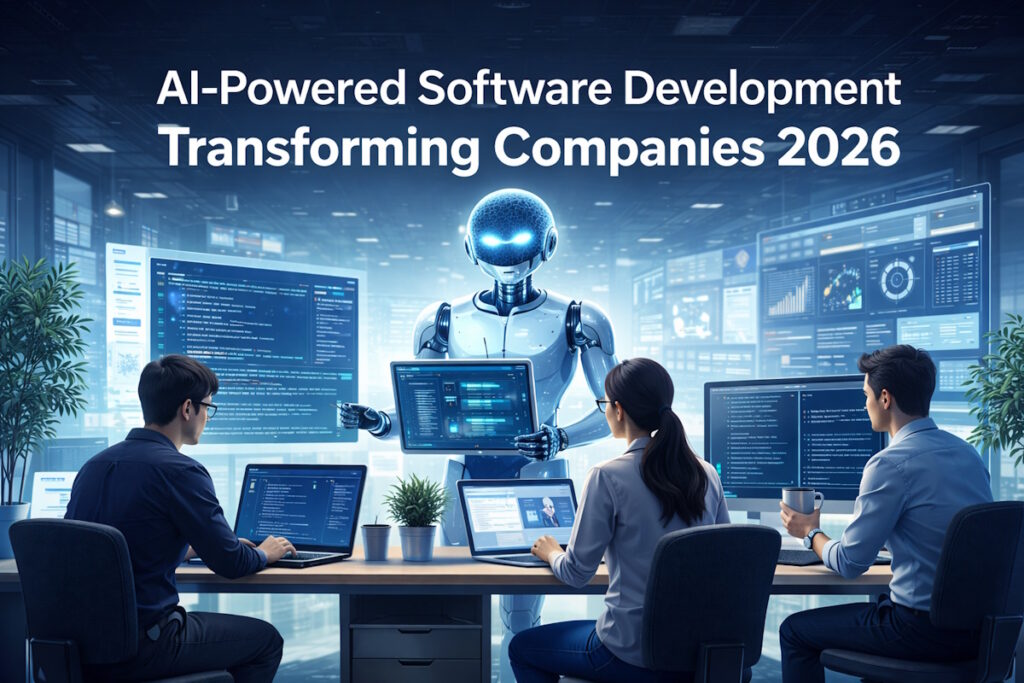
The software industry has always changed fast, but the speed of change in 2026 is unlike anything before. Artificial intelligence is no longer a future idea or an experiment. It is now a daily working tool inside almost every software company. From planning to coding, testing, deployment, and maintenance, AI is involved at every step.
Today, AI-powered software development is not just about writing code faster. It is about building better products, reducing mistakes, improving teamwork, saving money, and delivering value to customers much quicker. Software development companies that use AI well are moving ahead of those that still depend only on traditional methods.
This article explains how AI is transforming software development companies in 2026. It focuses on real changes, practical benefits, challenges, and what the future looks like. Everything is explained in simple English so anyone can understand it, even without a technical background.
The Rise of AI in Software Development
AI did not enter software development overnight. In earlier years, developers used basic tools for automation and error checking. Over time, machine learning models became smarter and could understand patterns in code, user behavior, and project data.
By 2026, AI has become a core part of software development companies. It helps teams make decisions, write clean code, manage time, and predict problems before they happen. Many companies now treat AI as a team member rather than just a tool.
The growth of cloud computing, large language models, and better data access made this possible. AI systems can now read documentation, understand project goals, and even suggest better designs.
This shift has changed how software companies work, hire talent, and deliver projects.
What AI-Powered Software Development Really Means
AI-powered software development means using artificial intelligence to support and improve every stage of software creation. It does not replace human developers. Instead, it works alongside them to increase speed, quality, and accuracy.
In 2026, AI tools can:
- Suggest code based on project needs
- Find bugs before testing starts
- Optimize performance automatically
- Predict project delays
- Improve security
- Help manage a software development project
The goal is not automation alone. The goal is smarter development.
Software companies now focus more on creativity, problem solving, and user experience, while AI handles repetitive and time-consuming tasks.
AI in Software Planning and Requirements Analysis
Planning is one of the most important parts of any software development project. Poor planning leads to delays, budget issues, and unhappy clients.
In 2026, AI helps software companies plan better from day one.
Understanding Client Needs
AI tools can analyze emails, meeting notes, documents, and voice recordings to understand what clients really want. They highlight unclear requirements and suggest questions before development starts.
This reduces misunderstandings and saves time later.
Better Project Estimation
AI looks at past projects, team skills, timelines, and complexity to predict how long a project will take and how much it will cost. These predictions are more accurate than manual estimates.
This helps software companies avoid overpromising and underdelivering.
Risk Prediction
AI can identify risks early. For example, it may warn that a feature is too complex or that the timeline is unrealistic. This allows teams to adjust plans before problems appear.
AI and Coding in 2026
Coding is where AI-powered software development shows its strongest impact.
Faster Code Writing
AI coding assistants can write complete functions, classes, and even modules based on simple instructions. Developers describe what they want, and AI suggests working code.
This saves hours of manual work and lets developers focus on logic and design.
Cleaner and Better Code
AI follows best practices and coding standards. It helps remove duplicate code, improve readability, and reduce complexity.
This leads to software that is easier to maintain and scale.
Support for Multiple Languages
Modern AI tools understand many programming languages. This helps software companies work on diverse projects without needing experts in every language.
Developers can switch between languages with less effort.
AI in Code Review and Quality Control
Code review is essential for quality but often takes a lot of time.
In 2026, AI performs most of the first-level code reviews.
Automatic Error Detection
AI scans code for bugs, performance issues, and security risks. It can detect problems that humans may miss, especially in large codebases.
Style and Standard Checks
AI ensures that code follows company rules and industry standards. This keeps projects consistent even when many developers are involved.
Faster Feedback
Developers receive instant feedback instead of waiting days for reviews. This improves productivity and morale.
AI in Software Testing
Testing has always been one of the most time-consuming parts of a software development project. AI has changed that.
Automated Test Creation
AI can create test cases automatically based on requirements and code behavior. This reduces the need for manual test writing.
Smart Test Execution
AI decides which tests to run first based on risk and impact. This saves time and computing resources.
Bug Prediction
By analyzing past bugs, AI predicts where new bugs are most likely to appear. Testers can focus on those areas.
Continuous Testing
In 2026, testing is continuous. AI tests software every time code changes, ensuring high quality at all times.
AI and DevOps Integration
DevOps focuses on fast and reliable delivery. AI has made DevOps smarter.
Automated Deployment
AI manages deployment schedules and chooses the best time to release updates. It reduces downtime and user impact.
Performance Monitoring
AI monitors applications in real time. It detects unusual behavior and fixes small issues automatically.
Predictive Maintenance
Instead of reacting to failures, AI predicts them. This helps software companies avoid outages and keep systems stable.
AI in Project Management
Managing a software development project is complex. AI helps project managers make better decisions.
Task Assignment
AI analyzes team skills, workload, and availability to assign tasks efficiently.
Timeline Management
AI tracks progress and predicts delays early. Managers can adjust resources before deadlines are missed.
Communication Support
AI summarizes meetings, tracks decisions, and updates project documentation automatically.
This reduces confusion and improves teamwork.
How AI Improves Collaboration in Software Companies
Software development is a team effort. AI helps teams work better together.
Better Knowledge Sharing
AI stores and organizes company knowledge. New developers can find answers quickly without asking others repeatedly.
Language Support
AI helps global teams communicate by translating messages and improving clarity.
Reduced Burnout
By handling repetitive work, AI reduces stress and allows developers to focus on meaningful tasks.
AI and Security in Software Development
Security is critical in 2026, as cyber threats continue to grow.
Secure Code Analysis
AI scans code for vulnerabilities during development. It helps fix security issues before release.
Threat Detection
AI monitors applications for suspicious activity and responds quickly to threats.
Compliance Support
AI helps software companies follow legal and industry rules by checking data handling and security practices.
Impact on Software Development Jobs
AI has changed roles, but it has not removed the need for humans.
New Skills Are Needed
Developers now need to understand AI tools and how to work with them. Problem solving and creative thinking are more important than ever.
Fewer Repetitive Tasks
AI handles routine work. Developers focus on architecture, innovation, and user needs.
New Roles Appear
AI trainers, AI project managers, and AI quality specialists are in high demand.
Benefits of AI-Powered Software Development for Companies
Software companies using AI enjoy many benefits.
- Faster project delivery
- Lower development costs
- Better software quality
- Happier clients
- More motivated teams
AI helps companies stay competitive in a crowded market.
Challenges of Using AI in Software Development
AI is powerful, but it also brings challenges.
Data Quality
AI depends on good data. Poor data leads to poor results.
Tool Costs
Advanced AI tools can be expensive, especially for small companies.
Learning Curve
Teams need time and training to use AI effectively.
Ethical Concerns
Companies must ensure AI decisions are fair and transparent.
How Software Companies Are Adapting in 2026
To succeed, software companies are making changes.
- Investing in AI training
- Updating workflows
- Combining human judgment with AI insights
- Building ethical AI guidelines
Those who adapt early gain a strong advantage.
The Future of AI in Software Development
The future looks even more AI-driven.
We will see AI that understands business goals better, designs systems automatically, and improves itself through feedback.
However, human creativity, empathy, and decision making will always remain important.
AI-powered software development is not about replacing people. It is about helping people do their best work.
Conclusion
In 2026, AI has become a powerful force in the software industry. It has changed how software development companies plan, build, test, and manage products. From coding to security and project management, AI is everywhere.
A modern software development project is faster, smarter, and more reliable because of AI. Companies that embrace this change are growing stronger and delivering better value to clients.
The key to success is balance. When humans and AI work together, software development reaches a new level of quality and innovation.
AI-powered software development is not the future anymore. It is the present, and it is transforming the industry every single day.
FAQs
1. What is AI-powered software development?
AI-powered software development is the use of artificial intelligence tools to support software creation. AI helps with planning, coding, testing, security, and managing a software development project. It allows developers to work faster, reduce errors, and build better software without replacing human creativity.
2. How does AI improve a software development project in 2026?
In 2026, AI improves a software development project by providing better planning, accurate time estimates, automatic testing, and early risk detection. AI helps teams avoid delays, manage tasks efficiently, and deliver high-quality software on time.
3. Does AI replace software developers?
No, AI does not replace software developers. AI-powered software development works as a support system for developers. It handles repetitive tasks like code suggestions and testing, while developers focus on problem solving, design, and user experience.
4. What are the main benefits of AI for software development companies?
The main benefits include faster project delivery, improved code quality, lower development costs, better security, and higher customer satisfaction. AI also helps teams collaborate better and reduces workload stress during a software development project.
5. What challenges do companies face when using AI in software development?
Some challenges include high tool costs, the need for proper training, data quality issues, and ethical concerns. Software companies must use AI carefully and combine it with human judgment to get the best results from AI-powered software development.